
Are We Fooling Ourselves with Synchronicity?
Exploring the thin line between universal guidance and the "Patternicity" of the human brain.

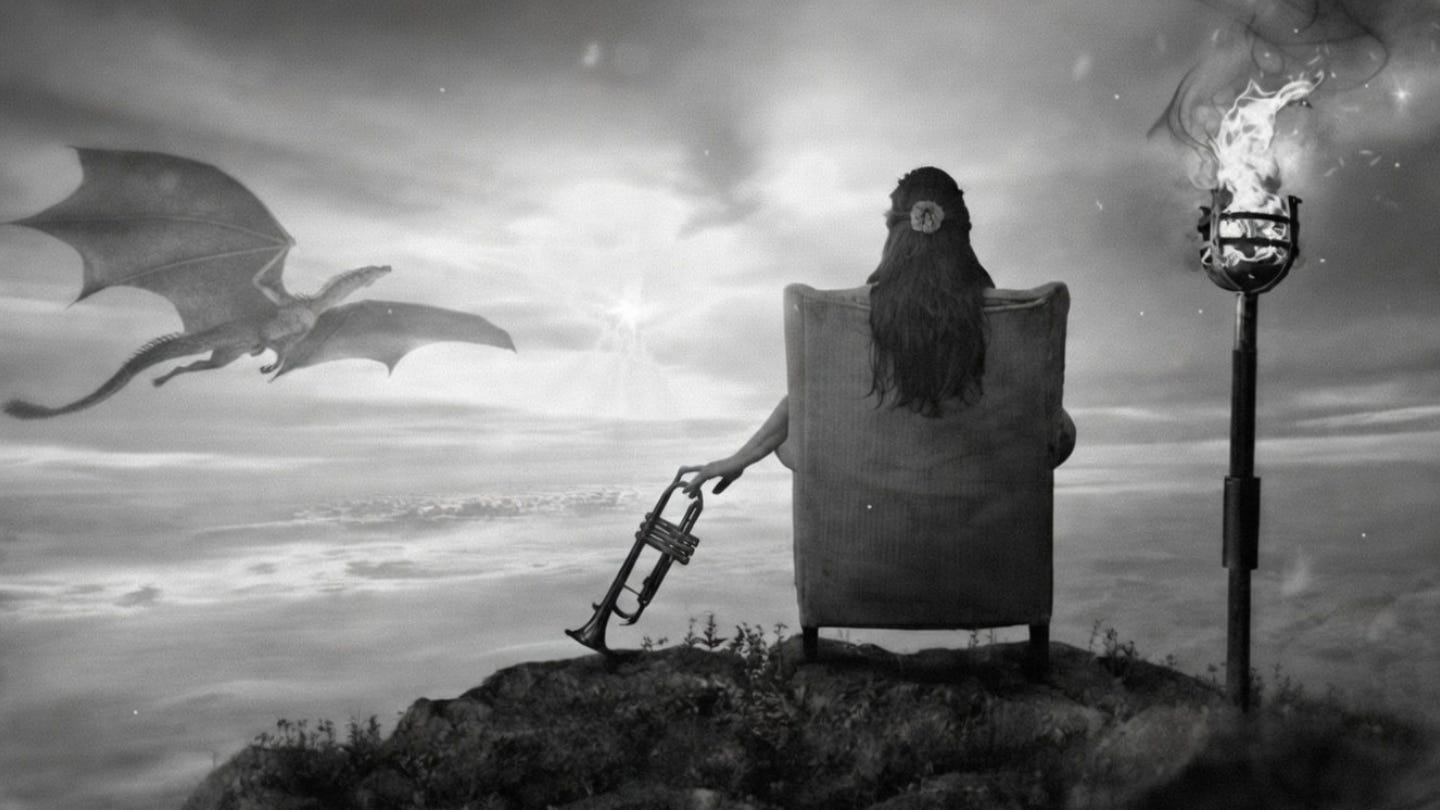
The Spell of Meaning: Are We Deceiving Ourselves?
Synchronicity has significantly influenced my life. Recently, I’ve been contemplating a recurring question: Am I deceiving myself?
We’ve all had moments when we meet someone who captivates us, making us think they might be our soulmate or ideal partner. As we pursue these relationships, we often experience a series of seemingly magical events that confirm our instincts. Synchronicities become frequent, and life appears more wondrous, with even ordinary events hinting at destiny.
All too often, these romanticized encounters lead to disappointment, exposing our illusions. This pattern appears across different areas of life—people, places, events, and even inanimate objects. When we become emotionally attached to something, particularly if it gives us goosebumps, we fall under a self-inflated spiritual spell.
The Mysterium Tremendum of Sound
Music is a catalyst for synchronicity. Humans are especially prone to entering trance-like states when listening to music, which can diminish our critical thinking and lead us into illusions and pattern-seeking behaviors. The effect becomes even more potent when alcohol or drugs are applied.
Religion often uses sound to evoke the feeling of the mysterium tremendum, encouraging people to kneel in humble adoration of their unseen deities or physical gurus. However, it is intriguing how swiftly this enchantment fades when faced with uncomfortable truths, like in the cases of John of God and Sai Baba, whose revered spiritual personas were involved in sexual misconduct. This highlights how compelling a collective illusion can be and how jarring it is when that illusion shatters.
Skepticism vs. The Symphony of Life
While synchronicity can enhance our lives, it’s important to approach it with cautious skepticism and analytical thinking. I’ve personally encountered events that seem to go beyond mere chance from a rational perspective. The patterns I’ve observed have led to personal growth and to opportunities I might have otherwise overlooked.
These experiences frequently give me goosebumps and confirm my gut feelings. However, the more emotionally intense the situation, the more convincing the interpretations seem, further complicating the picture. It is during heightened emotional moments that feelings of grandiosity and paranoia tend to flourish, fueling our subjective imaginations.
The questions that arise are:
Is synchronicity simply a kind of self-hypnosis?
Do we inadvertently trick ourselves into seeing patterns and assigning meaning to random events?
Does synchronicity confirm humans’ high susceptibility to trance states and hallucinations?
Disillusionment and the House of Cards
Based on my own experiences, I’ve encountered things that are difficult to explain. Despite how astonishing they are, they always end in disappointment. Delusions that disappear like mist in the air.
Synchronicity reflects creativity. The more open-minded we are, the more likely we are to experience a network of interconnected events, like a symphony of life. This process isn’t bound by logic; it’s dream-like. That’s why assigning these connections fixed meanings often leads to disappointment.
People might think they’re being guided to meet someone at a particular coffee shop, and their hope and trust are rewarded when they meet someone they would have never encountered otherwise. The result of such an encounter can be either good or bad and is interpreted based on individual beliefs. Either conclusion confirms the held belief.
As the years pass, those who embark on a committed search for truth often collide with reality, forcing them to fit their metaphysical interpretations into the confines of everyday life. This can lead to disillusionment as their metaphysical beliefs crumble like a house of cards.
The Psychedelic Return to Earth
These experiences remind me of psychedelic journeys, where everything is heightened. Bugs, trees, animals, people, and the sky take on deeper significance, drawing the psychonaut into a world of magic and wonder.
Yet, similar to synchronicity, these “otherworldly” journeys always come to an end. No matter how many enchanting experiences lift us into the ethereal realms, reality at its core remains the same, and returning to it can be difficult.
“Reality is that which, when you stop believing in it, doesn’t go away.”
— Philip K. Dick
I suggest that true guidance comes from our natural connection to reality because we are inherently a part of the universe. We can never truly be disconnected from reality, as we are simply a part of it. Our connection to the universe is as natural as a fish’s connection to water. However, due to our life experiences, we often feel separate, and in our search for validation, we grasp at anything that offers us emotionally charged hope.
The Hidden Hand and True Will
Is there a “Hidden Hand” that seemingly guides us when we’re following our true path? I believe so. Perhaps this support comes from our ancestral memory, the geometric flow of the universe, or an inner guardian angel. Only through direct experience of the synchronistic flow can we interpret the unconscious for our ears.
The true aim of the spiritual journey is to recognize our profound connection to reality, since we are fundamentally the universe. By understanding ourselves, we can analyze the survival mechanisms in our biology, just as we study the behaviors of dogs or cats. There is an inherent purpose and meaning embedded in our human existence.
The Anatomy of Magical Thinking
While synchronicity can be fascinating and evoke a sense of wonder, it’s important to approach it with critical thinking. Recognizing the influence of cognitive biases and understanding statistical probabilities can help people avoid self-deception when ascribing deeper meaning or supernatural forces to coincidences.
“Be wise as Serpents and harmless as doves.”
— Jesus the Gnostic
Here are some factors that contribute to our susceptibility to magical thinking:
Agency Detection: Humans naturally tend to attribute events to intentional agents. This mental process, called agency detection, developed as a survival skill that helped our ancestors rapidly identify threats. Yet it can also lead people to ascribe agency to natural events without clear causes, resulting in magical explanations.
Patternicity: Humans excel at recognizing patterns, even when none are present. This talent helps us spot predators or find edible plants, but it can also lead us to see false connections or causality without evidence. Such tendencies often lead to superstitious beliefs.
Illusory correlation: This cognitive bias can lead to belief in superstitions. For example, if someone wears a lucky charm and then has a positive outcome, they might believe the charm caused it, despite no real link. Over time, these false associations can strengthen superstitious beliefs.
Control and Uncertainty: People seek to understand and manipulate their surroundings. Superstitions give an illusion of control in uncertain situations, helping individuals feel more empowered. These beliefs allow them to influence events and ease feelings of helplessness. When scientific explanations are lacking or information is limited, people often turn to magical thinking to fill the gap.
Facing the Final Dilemma
Life includes both happiness and pain, ultimately ending in death. This creates a dilemma. Unrealistic hopes, religious teachings, and cultural influences—like Disney movies, horror films, paranormal documentaries, and ghost stories—shape our ideas about the afterlife. When mortality concerns us, we turn to mystical, philosophical, and spiritual reflections, often seeking immortality. This challenge is a fundamental part of the human experience.
So, what is the purpose of spiritual life? Is it the realm of myth, magic, and transcendence?
In my view, the human being develops and nurtures a soul within a subjective ecosystem, aiming to blossom like a flower. Our journey involves birth, growth, maturity, reproduction, and death. This cycle of life gives our existence meaning.
Speculation about what occurs after death is a fundamental aspect of human evolution. Near-death experiences strongly suggest a realm beyond mortal existence, aligning with the idea that humans are not defined solely by their identity but are part of a larger, determined system. Naturally, “Bob” and “Mary” will cease to exist physically, but the energy of life that we fundamentally are will return to its source.
And we find comfort in knowing that we are not alone; we belong to a shared lineage of 80 billion humans who have traveled this path before us.
Thank you for reading,
― Zzenn