
Why I Didn’t Cry when My Mother Died: The Taboo of Relief
Premature forgiveness is self-abuse. Here is why I refused to weep for the woman who raised me.

I recall a childhood moment when my mother was yelling at me, as she did daily. Suddenly, everything went silent. Her voice echoed in slow motion. I stood staring at the scene, and a thought crystallized in my mind: “One day you will regret how you treated me.”
That moment was a pivotal point in my childhood story — a prophecy that ultimately came true.
I invite you to my anathema.
The Gifted Taboo
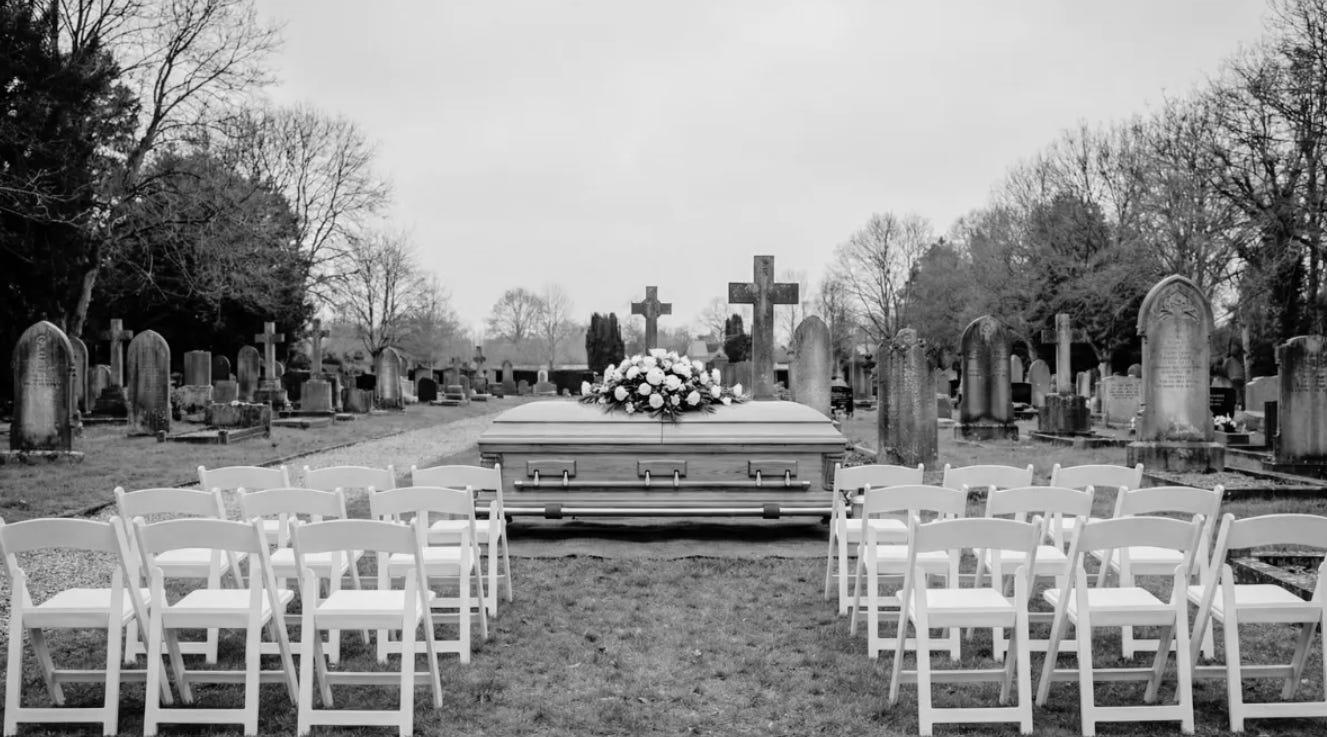
Amongst the mores of polite society, not attending to your mother’s deathbed, skipping her funeral, and — worst of all — voicing relief at her demise, is the ultimate sin. This taboo is likely to bless you with an astonishing lecture on why you should “love your mother no matter what.”
There will be no inquiry into your reasons; only virtue-signaled contempt. This is understandable given the collective denial regarding the long-term effects of generational child abuse.
Forget that the girl who her father molested from age five should get an award for living long enough to voice her contempt. Nay, childhood slaves must perform public wailing to maintain the social normalcy bias. You don’t want to rock the boat, or you might trigger the horror of awakening to reality.
The Saga of the Black Sheep
Society can turn you into a monster, and your family might come knocking with pitchforks. But this is the fate of the Black Sheep — an earned badge for those who survive and refuse to give up. These courageous individuals, having shed their guilt, sardonically benefit from their family’s disdain (I was looking for a reason to use that word).
Then there is the family religion that the enlightened Black Sheep refuses to follow. The Cult of Forgiveness is systemically at the root of this virus. The Black Sheep must forge their own evil ‘will’ to break through this brick wall. And that is why they become outcasts. They are the Buddhas, the immaculate conceptions, the “Crystal Children” who genetically defy the “thou shalt” indoctrination.
This “will to power” is a threat to the system because it defies the swaddling lies. They are the truth tellers — the anointed ones who stand at the threshold of the abyss. They are the ones who dare to voice their relief in the face of rejection.
Bad Son, Bad Brother
I am one of those deviants who “bailed” on my mother’s last days.
When my father died, I was the son who stood without emotion around his deathbed while my family sobbed. My mother scolded me for my emotional negation — an enforcement method she applied from the day I first uttered the word “No,” which resulted in a swift conviction and punishment without due process.
It’s not that I didn’t give it a shot, despite my mother regularly condemning my soul (“One day you will bow before the Lord and repent”). When I heard she was terminally ill, I borrowed the money to take the trip to California and sit beside her hospital bed.
But this led to a conspiracy hatched by her and my sister when I said I had to return early to handle business before meeting them at my sister’s house in Colorado, where my mother would eventually expire.
It was during this “poop-throwing protest” that I decided to commit the unforgivable sin of being true to myself — a decision that would echo down the corridors of the Akashic records. This act would define my rebellion and become the ultimate family sacrifice as a self-deified God (another juicy term I couldn’t help using).
The Dangers of Forgiveness
Early on in my adult quest to heal my debilitating trauma, I “chose” to forgive my parents in a selfish attempt to liberate my soul. Little did I know at the time that I was retraumatizing my inner child. I was, once again, attending to my parents’ needs before mine due to the taboo of not forgiving (we can thank Christianity for that one).
Unforgiveness is seen as bitterness, unhealed anger, and parental abuse because mental slavery is a safe space for those who care, terrified of reality. They buffer their consciousness with denial.
It’s safer to forgive while secretly harboring contempt in a dark heart. I find it both tragic and secretly amusing (shhhh) that we are expected to pretend to forgive when we haven’t acknowledged our contempt. Why should we listen to our feelings when we are told to suppress them — especially by the very abusers we’re meant to forgive? Oh, the irony.
But far be it from me to ignore the benefits; just because society often enforces forgiveness through rejection, that doesn’t mean it has no place. The psychologist Alice Miller emphasized that we shouldn’t forgive to skip over the emotional truth of our experiences.
The abused need to acknowledge their abusers, just as the alcoholic must admit their problem. The gentle waters of forgiveness come in their own time. However, forcing oneself to forgive before addressing the trauma — and before letting the voice of the victim express their contempt — makes healing impossible.
One could argue that the path to forgiveness is through the door of unforgiveness. An idea too advanced for the all-knowing citizen.
“What’s the use? Whom does it help? It doesn’t help my parents to see the truth. But it does prevent me from experiencing my feelings, the feelings that would give me access to the truth. But under the bell-jar of forgiveness, feelings cannot and may not blossom freely. For forgiveness does not resolve latent hatred and self-hatred but rather covers them up in a very dangerous way.”
— Alice Miller
How Dare You Feel Relieved
When my brother called to inform me that my mother had died, I replied: “Oh well, there’s that.”
His silent anathema was like a bullhorn, which resulted in a Scientology-like disconnect months later.
But the truth was, I felt relieved. No longer was I subject to guilt trips if I didn’t want to stay on the phone for hours while she chanted personal woes. No longer would I feel chronically sad about her life. No longer would I have to deal with my silence when she asked why I wouldn’t visit her. No longer would I have to worry about her misery.
Her difficult life finally ended, bringing a sense of relief because I genuinely cared for her. However, since she was having a relationship with a son in her imagination, my compassion went unnoticed. She felt bitter that I objected to her suffering and rejected her sacrifice, even though I knew she did the best she could with what she had.
I was genuinely set free. But that was unacceptable. I was supposed to pretend that I had no trauma. I was supposed to act compassionately. I was supposed to live up to the expectations of others… how about fuck that?
Permission to Be You
Dear reader, if you can relate to this narrative, I want you to know that it is okay not to forgive.
It is okay to trust that process and allow anger, grief, and loss to run their course. Trust that forgiveness will come in its own time, and be so true to yourself that if it never happens, your compassion will be greater than the sorrow for your abuser.
It is easy, at least for me, to understand that my mother was an abused child. But it was much harder to put my inner child before my mother’s. I had to set boundaries that were painful because I never wanted to have to choose between myself and her. But in her ignorance and pain, she made it impossible to do both.
It’s okay to cry. It’s OK not to forgive. It’s OK to feel contempt. Without owning these feelings, you’ll never reach apotheosis in your life’s saga. The path is difficult, but it’s the only path worth traveling.
Thank you for reading,
― Zzenn